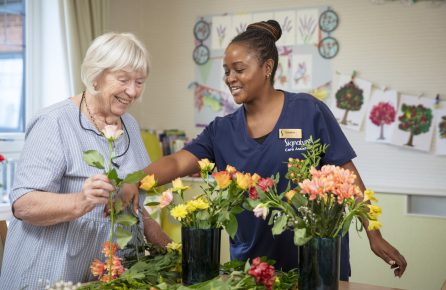
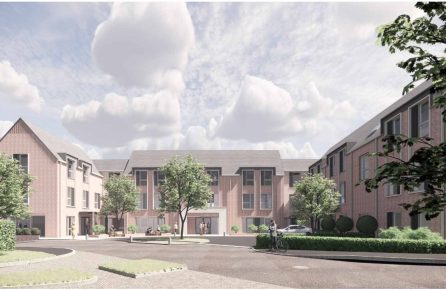
At Signature at Caversham, rehabilitation is not something that happens in isolation, it’s part of everyday life.
Through a long-standing partnership with Therapies on Thames, rehabilitation specialists for older people, rehabilitation is thoughtfully woven into the way residents are supported each day. The result is a collaborative, consistent approach that helps individuals rebuild strength, regain confidence and move forward with reassurance.
Laura Hulett, General Manager at Signature at Caversham, explains:
“It’s not about a single physio session. It’s about how rehabilitation becomes part of everything we do.”
A Partnership That Makes a Difference
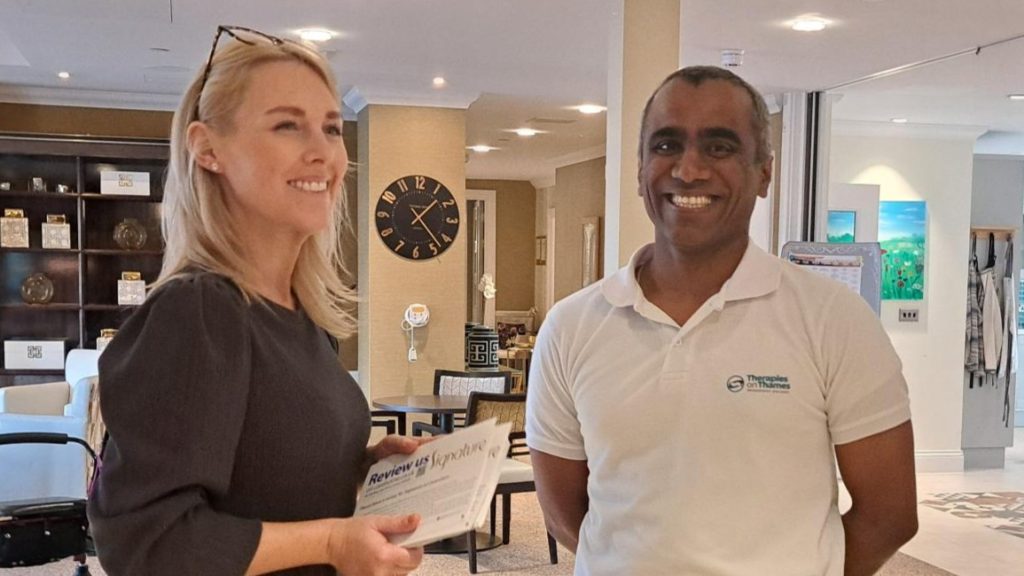
Signature at Caversham has worked closely with Therapies on Thames for many years, building a relationship that feels fully integrated within the home.
“We’re not seen as an external service,” says Raj Senniappan, Managing Director at Therapies on Thames. “We’re part of the team here.”
This partnership means therapists, including physiotherapists and occupational therapists, and care teams work side by side, sharing insight and supporting residents together.
“Care teams know residents best,” Raj explains. “They’re there throughout the day. We bring specialist knowledge, and when you combine the two, you get the best results.”
Rehabilitation as Part of Daily Living
At Signature, rehabilitation is not limited to scheduled sessions.
Instead, it becomes part of everyday routines, encouraging independence in ways that feel natural and meaningful.
“It’s the little things,” Laura says. “Getting dressed, walking to meals, standing up independently – these are all part of rehabilitation.”
This approach ensures progress continues throughout the day, not just during set therapy time.
Rehabilitation is also embedded into the social life of the home. One example is the WWW Club, initially established by Therapies on Thames and now supported by the wider team as an ongoing activity available to all residents. The club creates opportunities for residents to remain active, support one another and maintain a sense of purpose.
More mobile residents may assist those who use wheelchairs by helping them move around the home, creating benefits for everyone involved. These everyday interactions help build strength, confidence and social connection while reinforcing independence in a meaningful and enjoyable way.
“If rehabilitation only happens for an hour, it’s not enough,” Raj adds. “It needs to be supported throughout the day.”
Supporting Residents from Day One
Every resident benefits from early assessment and ongoing support.
When someone moves in, their mobility, environment and individual needs are carefully reviewed.
“We take a holistic approach,” Raj explains. “It’s not just about how someone walks – it’s about how they live.”
This might include adapting equipment, introducing tailored exercises, or simply enhancing comfort and confidence.
Rehabilitation programmes are also designed around an individual’s interests, hobbies and personal goals. For example, exercises may be adapted to reflect activities a resident has previously enjoyed, such as golf, gardening or other favourite pastimes. By making rehabilitation relevant and meaningful to the individual, residents are often more motivated to participate, increasing engagement and helping to achieve better outcomes.
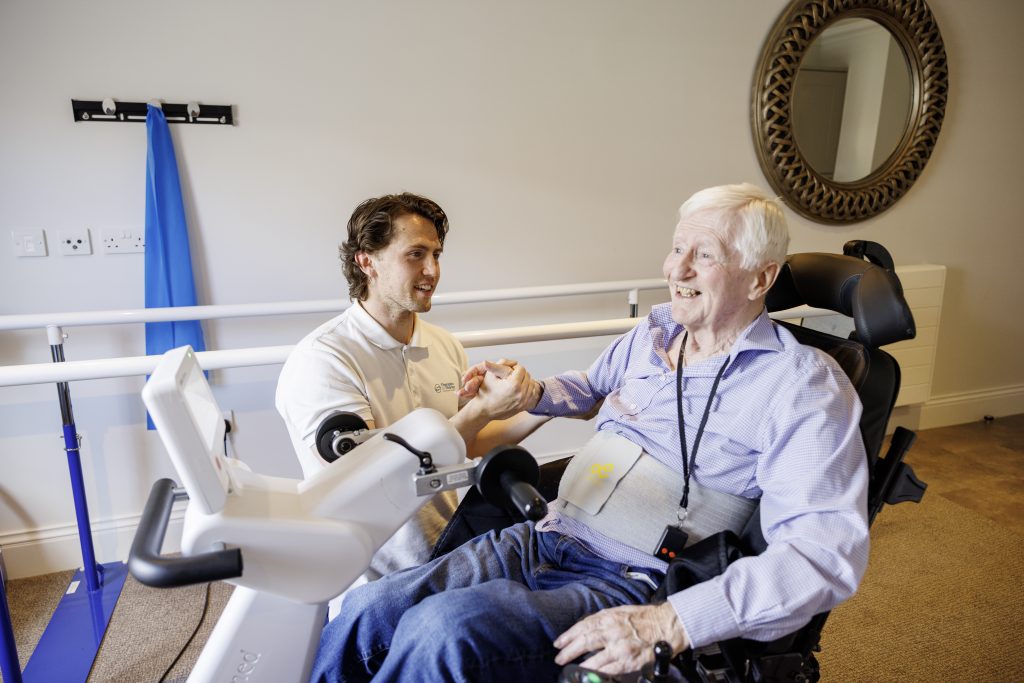
The team also makes use of specialist equipment such as the MotoMed, an accessible exercise device that enables people with a wide range of abilities to participate in therapeutic movement. Whether someone is recovering strength, maintaining mobility or living with more complex physical challenges, the MotoMed helps ensure rehabilitation remains inclusive and accessible for all residents.
The focus is always the same: supporting independence wherever possible.
Confidence Is Key
Rehabilitation is not just physical – confidence plays a vital role.
“Fear of falling is one of the biggest barriers we see,” says Raj. “Sometimes people can do more than they think, but they’ve lost confidence.”
By recognising this and working gently to rebuild confidence, residents are often able to achieve more than expected.
“It’s about understanding the individual,” he adds. “Not just the condition.”
Rehabilitation in Action
The impact of this collaborative approach can be seen in the experiences of residents who have benefited from rehabilitation at Signature at Caversham.
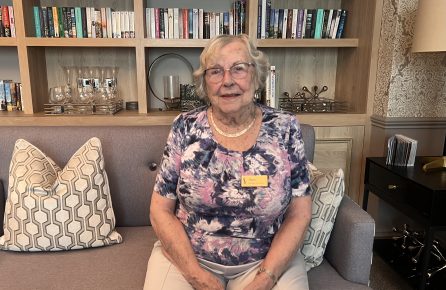
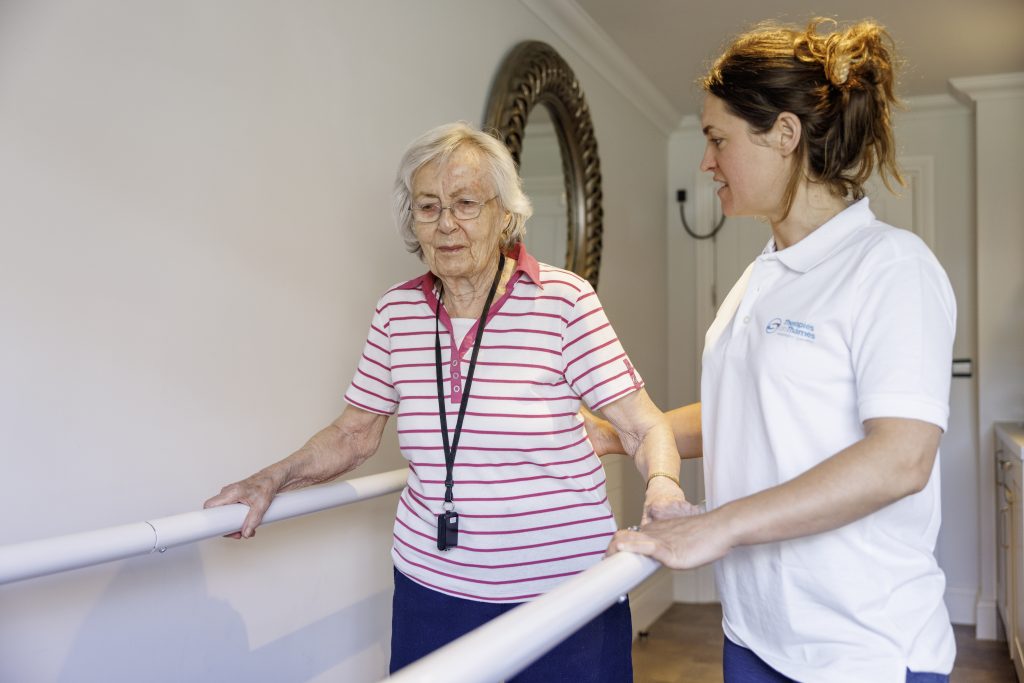
One resident, Beverley, arrived following a fall and hospital stay unable to walk independently. Through a personalised rehabilitation programme, daily physiotherapy and consistent support from both the therapy and care teams, she gradually rebuilt her strength and confidence.
“The team do encourage you,” Beverley says. “Because that’s how you get results.”
Over time, she progressed from being unable to walk to standing independently and taking her first steps again. For Beverley, rebuilding confidence was just as important as regaining mobility.
“I can now stand without holding on,” she explains. “And I’m walking again, which is something I couldn’t do just a few weeks ago.”
Her experience reflects the philosophy shared by both Signature at Caversham and Therapies on Thames: rehabilitation works best when it is supported throughout the day, focused on the individual and centred on helping people regain independence at their own pace.
Recovery with Purpose
At Signature, rehabilitation is always guided by meaningful outcomes.
For some residents, that means maintaining mobility and independence. For others, it means preparing to return home safely after a hospital stay.
“We often see people who are ready to leave hospital, but not ready to live fully independently,” Laura explains.
With time, support and the right environment, many regain the strength and confidence to return home.
Importantly, that journey can continue after discharge, with ongoing therapy available within the community where needed.
An Environment That Supports Progress
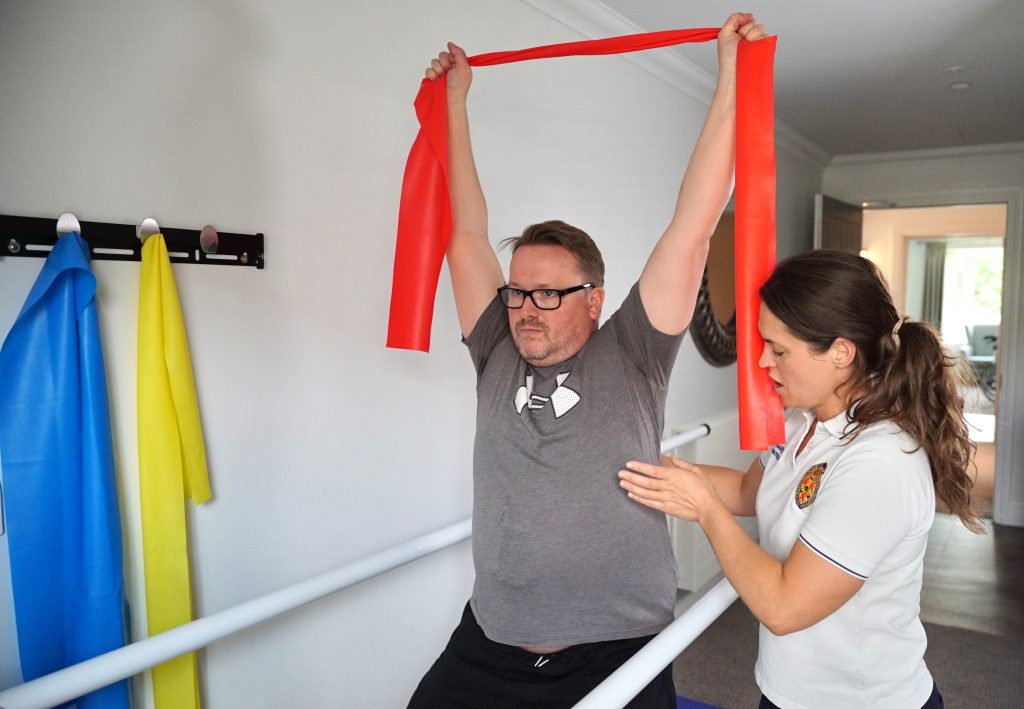
The setting itself plays an important role in recovery.
At Signature at Caversham, residents benefit from a calm, comfortable environment where they can focus on getting stronger, both physically and emotionally.
“You need time to recover properly,” Raj says. “Good rest, good food, the right support – that’s where rehabilitation really happens.”
Rather than focusing solely on clinical outcomes, the approach considers the whole person and their lifestyle.
“It’s not just about walking again,” Laura adds. “It’s about being able to live well and feel confident doing so.”
A Shared Commitment to Quality of Life
At the heart of this approach is a shared goal: helping residents live as independently and confidently as possible.
“It’s about improving quality of life,” Laura says. “That’s what matters most.”
For Raj and his team, the motivation is simple:
“People arrive at a difficult time, for themselves and their families. Our role is to support them, reassure them and help them move forward.”
More Than Rehabilitation
At Signature at Caversham, rehabilitation is delivered through a collaborative, person-centred approach that supports residents at every stage of their journey.
Through partnership working, specialist expertise and a genuine understanding of what matters to each individual, residents are supported to regain strength, independence and confidence in a way that feels natural, respectful and reassuring.
As Raj reflects:
“The most rewarding part is seeing people regain confidence and achieve goals they may not have thought possible.”
To find out how our respite, rehabilitation and convalescence care can support you or a loved one, click here.
If you would like to speak to a member of our team, call us on 0118 427 0291 or alternatively email us at enquiries.caversham@signaturesl.co.uk
To find out more about Signature at Caversham, click here.